Paying the Price for Ambition: How Casino Math Quietly Bleeds the Aggressive Player Dry
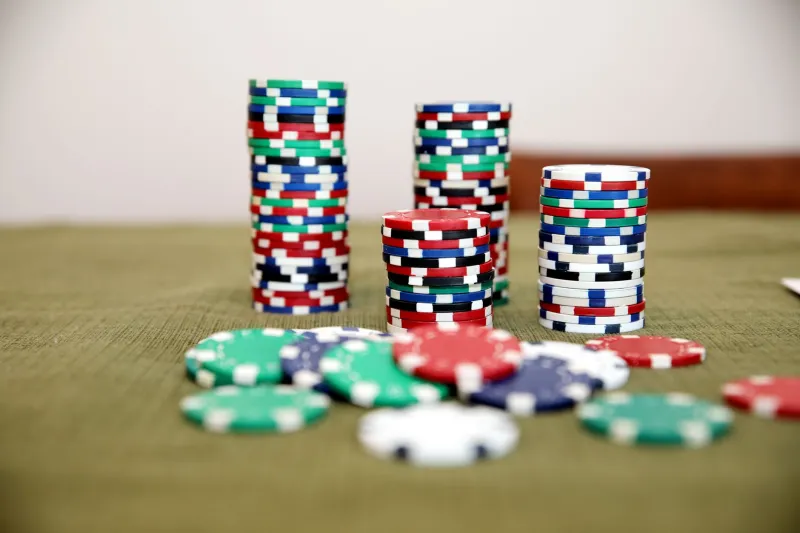
There's a particular kind of player every casino loves. Not the reckless newcomer throwing chips around without a clue. Not the cautious retiree nursing a twenty-dollar slot budget for three hours. The player casinos truly adore is the one who's almost figured it out—the ambitious grinder who's read a few strategy guides, built up some confidence, and is now ready to press their edge.
That player is the most profitable human being in the building. And if you've ever found yourself thinking you were close to cracking the code, there's a real chance you've been that player too.
Let's talk about why.
The House Edge Isn't a Flat Tax—It's a Variable One
Most people understand the concept of house edge in the abstract. The casino takes a percentage, players lose over time, that's the deal. What's less understood is that the house edge isn't uniform across situations. It shifts based on how you play, what bets you place, and critically—how much you're willing to risk chasing a particular outcome.
Take roulette. The standard American double-zero wheel carries a house edge of about 5.26% on most bets. That's already steep. But when a player starts placing combination bets, corner bets, or five-number bets (the worst bet on the board at 7.89%), the effective edge climbs. The casino doesn't need you to make bad decisions out of ignorance. It just needs you to make more decisions—and ambitious players always do.
Blackjack is even more instructive. Basic strategy brings the house edge down to roughly 0.5%. That's genuinely player-friendly. But the moment a player starts deviating—doubling down in marginal situations, splitting pairs out of impatience, taking insurance because they're up and feeling lucky—the edge creeps back toward 2%, 3%, higher. The game rewards discipline and punishes ambition almost mechanically.
Payout Timing and the Illusion of Momentum
Slot machines operate on something called a Random Number Generator, or RNG. Every spin is statistically independent. The machine has no memory of your last spin, your last session, or your last hundred dollars. This is the legal and mathematical reality.
But here's where it gets psychologically complicated: payout timing, while random in the strict sense, feels patterned to the human brain. We are pattern-recognition machines. It's an evolutionary feature, not a bug. The problem is that our pattern-detection hardware was built for a world of real causes and effects—predators, weather, social cues. It was not built for RNG algorithms, and it misfires constantly in that environment.
Modern slot design accounts for this. Near-misses—where two jackpot symbols land and the third falls just short—are engineered into the reel weighting. Studies have shown that near-misses activate the same reward pathways in the brain as actual wins. They create urgency. They suggest proximity to a payout that mathematically does not exist. For an ambitious player already convinced they're reading the machine's rhythm, a near-miss is rocket fuel.
The result? Escalating bets at exactly the wrong moment. The machine isn't heating up. Your brain is.
False Confidence and the Escalation Trap
Casino game design has a structural feature that rarely gets discussed openly: it rewards early sessions disproportionately. This isn't conspiracy—it's math and psychology working together.
When you sit down and win your first few hands, or hit a small slot payout early, your brain anchors to that experience. You feel like you understand the game. You feel like the environment is favorable. Research in behavioral economics calls this the "hot hand fallacy"—the belief that a winning start signals a winning trend.
What actually happens is that your risk tolerance expands. You bet bigger. You stay longer. And the house edge, which is a percentage-based mechanism, extracts more money in absolute terms from every larger bet you make. A 5% house edge on a $10 bet costs you fifty cents in expected value. On a $100 bet, it's five dollars. The casino didn't change anything. Your ambition scaled up the damage.
This is the throne tax. The more aggressively you pursue the win, the more you pay for the privilege of believing you're close.
The Structural Design Nobody Talks About
Beyond individual game mechanics, casinos are physical and digital environments engineered to extend sessions. No clocks. Optimized lighting. Reward sounds calibrated to dopamine release. On digital platforms, autoplay features, rapid spin cycles, and seamless deposit flows all reduce the friction that might otherwise prompt a player to pause and reassess.
For the ambitious player, these features are particularly dangerous. A disciplined beginner might not notice the lack of a clock. A player who's convinced they're about to turn the session around absolutely will not notice it—because they're not looking for an exit. They're looking for the comeback.
The environment is built for exactly that psychology.
Bankroll Management as the Only Real Shield
Here's the honest truth: you cannot out-think the house edge through intuition, pattern recognition, or sheer determination. The math is fixed. The psychology is stacked. The environment is optimized.
What you can control is your exposure. Smart bankroll management doesn't just protect your money—it protects your decision-making. When you set hard session limits before you sit down, you remove the in-session negotiation that ambitious players always lose. "Just fifty more dollars" is a negotiation. A pre-set stop-loss is not.
Practical starting points:
- Set a session bankroll as a fixed percentage of your total gambling budget—most disciplined players use 10-20% per session, never more.
- Establish a win ceiling, not just a loss floor. Knowing when you're up enough to walk away is just as critical as knowing when you're down enough to stop.
- Track your actual results over time. Ambitious players love to remember the wins. The spreadsheet doesn't lie.
- Recognize escalation as a warning sign, not a strategy. If you're increasing bet sizes because you're chasing, you're not playing smart—you're paying the tax.
The throne doesn't go to the most aggressive player in the room. It goes to the one who's still in the game when everyone else has busted out. Protect your stack. Play the long game. That's the only math that works in your favor.