Chasing Ghosts: The Truth About Hot Streaks and Why the Casino Always Knows Better
You've felt it before. Three wins in a row. The chips stacking up. That electric buzz that whispers, keep going, you're in the zone. It's one of the most intoxicating feelings in gaming — and it's also one of the most dangerous illusions your brain will ever sell you.
At JadiKing8, we're all about helping players rule the game with real knowledge, not comfortable myths. So let's pull back the curtain on hot streaks, cold streaks, and the statistical reality that casinos — both physical and online — are built on.
Your Brain Is a Pattern Machine (Even When There Are No Patterns)
Human beings are wired to find patterns. Evolutionarily, that skill kept us alive — spotting the shape of a predator in the bushes, recognizing which berries were safe to eat. The problem? That same pattern-recognition engine runs constantly, even when the input is completely random.
This is what psychologists call the clustering illusion — the tendency to perceive streaks or patterns in data that is, at its core, just noise. Flip a coin ten times and you might get heads six or seven times in a row. That doesn't mean the coin is biased. It doesn't mean heads is "due" to keep coming. It's just what randomness looks like in small samples.
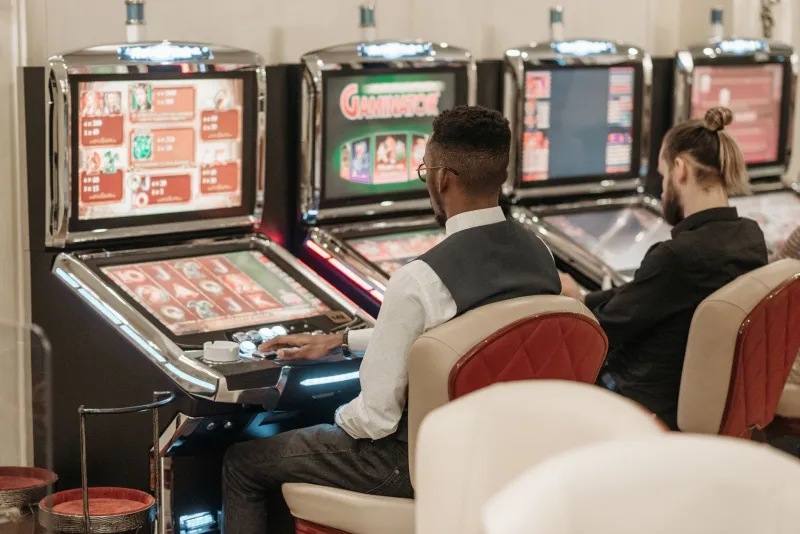
Slot machines, roulette wheels, and most casino card games operate on the same principle. Each spin, each roll, each deal is an independent event. The machine has no memory. The wheel doesn't owe you anything. And yet, the moment you land three wins back-to-back, your brain starts building a narrative.
The Gambler's Fallacy Has a Slicker Cousin
Most players have heard of the Gambler's Fallacy — the belief that after a long losing streak, a win is somehow more likely because you're "due." It's been debunked so many times it's practically a cliché at this point.
But its cousin is sneakier and way more common: the Hot Hand Fallacy. This is the belief that a current winning streak signals some kind of momentum, skill, or favorable condition that's likely to continue. Basketball fans see it all the time — the player who's hit five shots in a row and everyone assumes the sixth is a lock.
In sports, there's at least an argument for psychological momentum and physical rhythm. In a slot machine or a roulette wheel? There is no hand. There is no momentum. There is only a random number generator doing exactly what it was programmed to do — produce outcomes that, over millions of spins, conform to a precise mathematical edge in the casino's favor.
The streak you're riding isn't a signal. It's a coincidence that your pattern-hungry brain has dressed up in a tailored suit.
What the House Edge Actually Means for Your Session
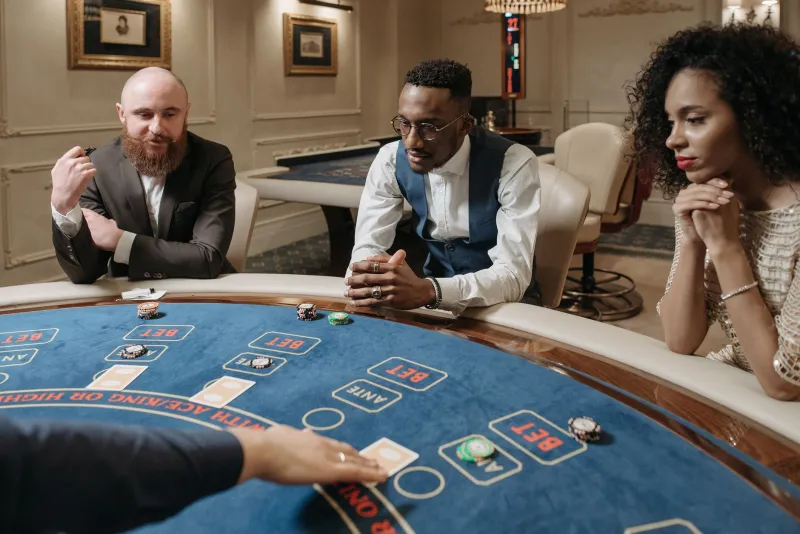
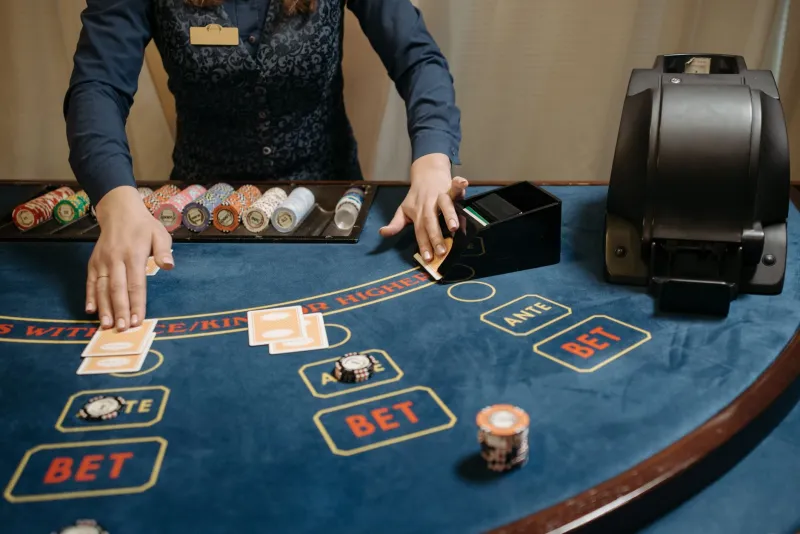
Here's where it gets concrete. Every casino game carries a built-in mathematical advantage for the house — expressed as a percentage. American roulette sits around 5.26%. Slots can range wildly, but many hover between 4% and 10% depending on the game. Blackjack, played with perfect basic strategy, can drop the edge below 1%.
That edge doesn't mean you lose 5 cents on every dollar, every single spin. What it means is that over a large enough sample of plays, the casino will retain that percentage of all money wagered. In the short run — your session tonight, this weekend — variance can swing wildly. You can absolutely run hot. You can absolutely run cold.
The trap is mistaking short-term variance for long-term signal.
When you're up $300 after an hour, that's not evidence that you've figured something out. It's evidence that you're currently on the favorable side of a distribution that, given enough time, will trend back toward the mathematical mean. The casino isn't worried about your hot streak. They've seen ten thousand of them. They know how the story ends.
The Design Is Not an Accident
Here's the part that should genuinely change how you look at a casino floor — or a gaming platform. The experience is engineered to sustain the illusion of momentum.
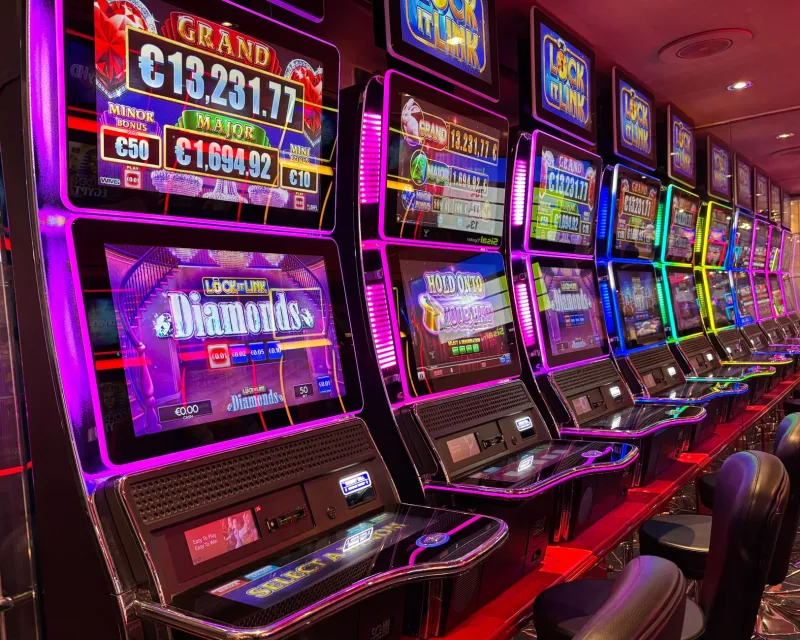
Near-misses on slot machines aren't random. Many slots are programmed to display near-win combinations more frequently than pure chance would produce, because research shows near-misses extend play sessions significantly. That "almost" jackpot isn't bad luck — it's a calculated psychological nudge.
Sounds, lights, and win celebrations are calibrated to trigger dopamine responses even on small wins — sometimes wins that don't even cover the cost of the bet. You won $0.40 on a $1.00 spin, and the machine is playing a victory jingle. Your brain logs it as a win anyway.
This isn't a conspiracy theory. It's documented behavioral science, and major gaming jurisdictions in the US have studied it extensively. Understanding that the environment is designed to distort your perception of probability is the first step toward operating outside of it.
Playing Smart When the Streak Hits
None of this means you can't enjoy a hot run or that winning isn't real. You absolutely can win, and those sessions are genuinely fun. The goal isn't to drain the joy out of gaming — it's to make sure the joy doesn't drain your bankroll.
A few mindset shifts that actually work:
Set a win ceiling, not just a loss limit. Most players set a stop-loss — a point where they walk away if they're down a certain amount. Fewer set a win target. Decide before you start that if you're up X amount, you lock it in. Hot streaks are the most dangerous time to keep playing, not the safest.
Separate the experience from the outcome. The entertainment value of a gaming session exists whether you're up or down. When you start chasing a feeling — that rush of the streak — rather than playing within your plan, you've handed control to the machine.
Treat each session as its own isolated event. Last night's run means nothing for tonight. Approach every session with fresh eyes and a fresh bankroll discipline, regardless of what happened before.
Know what game you're actually playing. Different games have different volatility profiles. High-volatility slots produce big swings — long dry spells punctuated by large hits. Low-volatility games pay smaller amounts more consistently. Matching a game's profile to your bankroll and risk tolerance is strategy. Chasing a hot machine because it paid out twice is not.
The Real Edge Is Information
At the end of the day, the players who last longest — and enjoy the game most — are the ones who understand what they're actually dealing with. Randomness isn't your enemy. Misunderstanding randomness is.
Hot streaks are fun. Celebrate them. Just don't crown them. The casino has been playing this game a lot longer than any individual session, and the math is always patient.
Know the rules. Know the odds. And when that streak hits, know exactly what it is — and what it isn't.
That's how you rule the game.