High Stakes, Different Rules: How Tournament Play Rewrites Everything You Think You Know
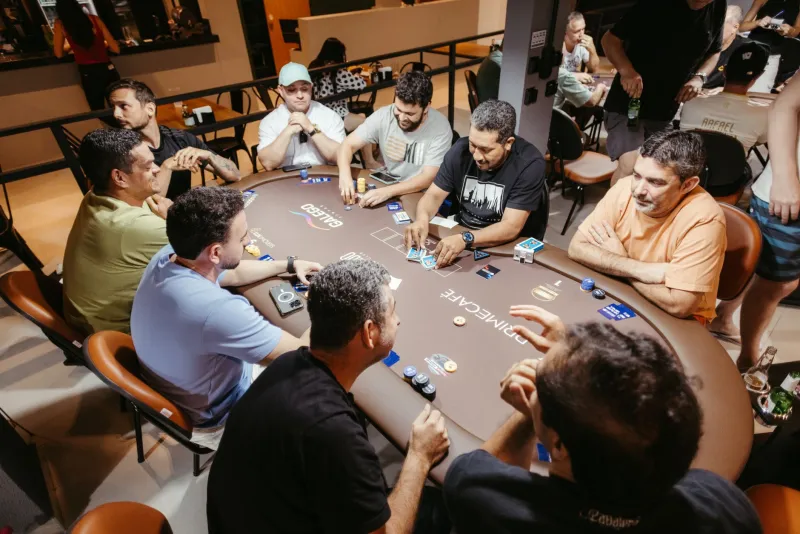
Picture two players sitting down at the same game. Same cards, same odds, same interface. But one of them is in a tournament bracket and the other is just playing a casual session. Watch them long enough and you'll notice something strange — they're making completely different decisions, and both of them might be right.
That's the thing about competitive tournament structures that most casual players never fully grasp. It's not just higher stakes. It's a different game operating under a different logic, with a different definition of winning.
The Fundamental Shift: Survival vs. Profit
In a standard cash game or solo session, your goal is straightforward — end up with more money than you started with. Every decision gets filtered through that single lens. Expected value rules everything.
In a tournament, that framework breaks almost immediately.
Your actual goal is to outlast other players. Accumulate enough chips to stay alive long enough to reach the money, and then — if you're really locked in — push for the top spots where the real payouts live. This changes the calculus on nearly every decision you'll make.
A bet that's mathematically profitable in a cash game can be strategically catastrophic in a tournament if it risks your entire stack. Conversely, a move that looks reckless in isolation might be exactly right when you're short-stacked and the blinds are climbing. Context isn't just important in tournament play — it's everything.
Stack Size Is Your Entire World
Casual players think about their bankroll in terms of how much they can afford to lose. Tournament players think about their chip stack in terms of how many big blinds they have left, what that number means relative to the other players at the table, and how much time they have before the next level forces their hand.
This is chip management, and it's an art form.
A big stack gives you leverage — you can pressure shorter stacks, take calculated risks, and still survive a bad beat. A medium stack demands patience and selective aggression. A short stack forces a completely different mode: you're looking for spots to shove and double up, because slow-playing your way to zero isn't a strategy, it's a slow surrender.
The mistake most casual players make when they enter their first tournament is treating their chips like cash. They play conservatively when they should be pushing, and they get attached to their stack when they should be gambling it to stay relevant. Chips in a tournament only have value insofar as they keep you alive and give you options. They're tools, not trophies.
Risk Tolerance Flips at the Final Table
Here's a counterintuitive truth that trips up players who haven't studied tournament theory: the closer you get to the money, the more conservative smart players often become — and then, once they've secured a payout, aggression can spike sharply.
This is called the "bubble" dynamic. Just before the tournament pays out, everyone tightens up. Nobody wants to be the last person eliminated without cashing. Short stacks get an unexpected lifeline as bigger stacks avoid confrontation. If you understand this dynamic and your opponents don't, you can steal blinds and antes almost for free during this window.
Once the bubble bursts and everyone's in the money? The math changes again. Now it's about maximizing your position within the payout structure, which often means taking shots you'd never take in a cash game.
Psychological Resilience Is a Skill, Not a Personality Trait
The mental game in tournaments is brutal in a way that casual play rarely replicates. You can play perfectly for three hours, make every correct decision, and get eliminated by a two-outer on the river. That's variance, and it's real, and it happens to the best players in the world regularly.
What separates consistent tournament performers isn't an absence of tilt — it's a faster recovery from it. They've trained themselves to process a bad beat, recalibrate emotionally, and get back to making good decisions within minutes rather than hours. That's not natural talent. That's deliberate practice.
One useful mental framework: treat each hand as a completely isolated event. The chips you just lost on that brutal beat aren't coming back regardless of how you play the next hand. The question is only ever "what's the best decision right now, given my current situation?" That's it. Everything else is noise.
Reading the Room: Casual Players Don't Adjust, Champions Do
In a casual game, you're mostly playing the cards and the math. In a tournament, you're playing the players — their tendencies, their stack pressures, their emotional states — as much as anything else.
The guy who's been card-dead for forty minutes is probably going to shove light when he finally picks up a hand. The player who just doubled up is likely to loosen up and play more aggressively for the next orbit. The short stack two seats to your left is terrified of busting and will fold to almost any pressure.
Reading these dynamics and adjusting in real time is what tournament players mean when they talk about "feeling the table." It's not mystical — it's just paying attention to information that casual players ignore because they're focused entirely on their own cards.
Making the Jump
If you've been grinding casual sessions and you're curious about competitive tournament play, the best first step is low buy-in events — the kind where the stakes are low enough that mistakes don't sting too badly, but the structure forces you to think in tournament terms. Freerolls and micro-stakes tournaments are perfect training grounds.
The goal isn't to win your first tournament. The goal is to get comfortable with a completely different way of thinking about the game — one where survival, position, and stack management matter as much as the cards in your hand.
Master that shift, and the leaderboard starts to look a lot more reachable.